Basic Information
Metric Units US Units
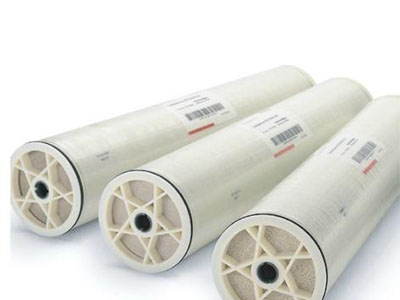
Feed Spacer Thickness 0.86 mm 34 mil
Effective Membrane Area 37.2 m² 400 ft²
Average Salt Rejection 99.5 % 99.5 %
Minimum Salt Rejection 99.0 % 99.0 %
Average Permeate Flow 39.9 m³/d 10500 gpd
Minimum Permeate Flow 31.9 m³/d 8400 gpd
Test conditions for membrane elements: Pressure 15.5 bar (225 psi), NaCl solution concentration 2000 mg/l, operating temperature 25 °C (77 °F), operating pH 7, single element recovery 15%.
Operating Conditions
Metric Units US Units
Operating Pressure 41 bar 600 psi
Operating Temperature 45 °C 113 °F
Maximum Feed Water SDI 5 5
Maximum Feed Flow 18.0 m³/h 80 gpm
Minimum Concentrate Flow 2.7 m³/h 12 gpm
Operating pH Range 2 - 11 2 - 11
Chemical Cleaning pH Range 1 - 12 1 - 12
Maximum Pressure Drop per Element 1.0 bar 15 psi
Maximum Pressure Drop per Pressure Vessel 3.5 bar 50 psi
Maximum Free Chlorine in Feed Water 0.1 ppm 0.1 ppm
Additional Information
Handle RO membrane elements with care, do not drop them •
Each RO membrane element undergoes rigorous wet testing before delivery, is preserved with 1% sodium bisulfite solution, and then packaged in oxygen-free vacuum
packaging.
•
Storage should avoid freezing and direct sunlight. Storage temperature should be below 35 °C (95 °F). •
Post-Installation Notes
Keep RO membrane elements moist. If storage time exceeds 7 days, add preservatives compatible with the membrane elements. •
During initial operation, RO permeate produced in the first 30 minutes must be drained. •
At no time should the permeate backpressure exceed the feed water pressure. •
If the operating pressure drop increases by more than 20% or the permeate flow rate decreases by more than 10%, the membrane needs to be cleaned. •
Only use chemical agents that are harmless to membrane elements. •
For more detailed information, please download the Lewabrane ® Operation and Maintenance Manual from our website www.lpt.lanxess.com