
-
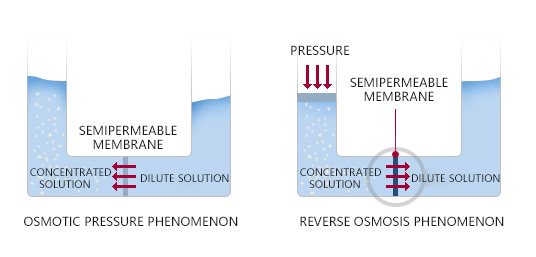 Filtration principle of reverse osmosis2017-12-07Two solutions with different concentrations are separated by a semipermeable membrane. After a period of time, the solvent of the lower-concentration solution migrates toward the higher-concentration side. The resulting liquid level difference generates osmotic pressure. Reverse osmosis applies pressure against the natural osmotic direction, which is a water purification technology allowing only water molecules to pass through the semipermeable membrane.Read more >
 -
 Difference between ion exchange demineralization and ion exc2017-12-07Ion exchange desalination is intended to remove all salt-forming ions in water, so it requires the simultaneous use of strong-acid cation resins and strong-base anion resins, rather than only salt-type resins. This is because although salt-type resins can remove the original salt-forming ions in water, they generate new salt-forming ions, leaving the salt content in water basically unchanged. To remove salt-forming ions in water, the combined use of strong-acid resins and strong-base resins is essential.Read more >
 -
 Principles and Process Selection for Reverse Osmosis System2017-12-07Reverse Osmosis System Pretreatment Principle and Process Selection Overview of Reverse Osmosis System Pretreatment For reverse osmosis membrane elements, water sources cannot directly enter the membrane elements in most cases, because the impurities contained in them will contaminate the membrane elements, affecting the stable operation of the system and the service life of the membrane elements.Read more >
 -
 Overview of Water Treatment2026-04-30The selection of water treatment process flow and the composition of main structures shall be determined through investigation and research, tests of different process combinations, or reference to the operation experience of existing water plants under similar conditions, combined with local operation and management conditions, and comprehensive technical and economic comparison, based on raw water quality, designed production capacity, and treated water quality requirements.Read more >
 -
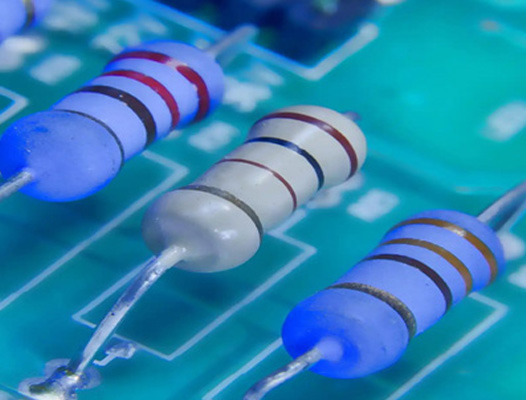 The concepts of resistance and conductivity2026-04-22Resistivity The electrical conductivity of water is related to its resistance value. A higher resistance value means poorer conductivity, while a lower resistance value means better conductivity. According to Ohm's Law, at a constant water temperature, the resistance R of water is inversely proportional to the vertical cross-sectional area F of the electrodes and directly proportional to the distance L between the electrodes: R=ρ·L/F. In the formula, ρ refers to resistivity, also known as specific resistance. The unit of resistance is ohm (symbol Ω), or microohm (μΩ); 1Ω equals 10⁶μΩ.Read more >
 -
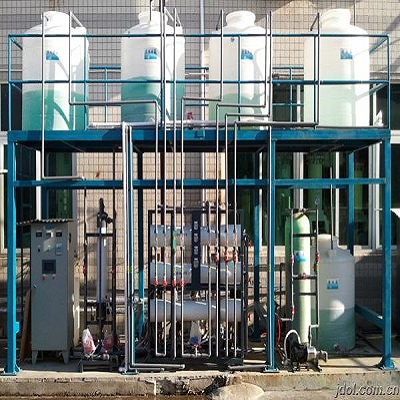 Analysis of Water Treatment Technology: Construction Technol2026-04-21Check the packaging integrity of pipes and fittings before construction; clean up those with damaged packaging.Read more >
 -
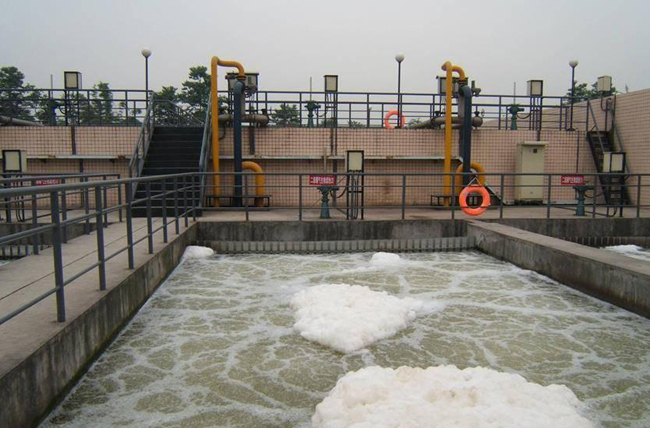 Optimization of SBR-SBHBR process technology for phosphorus2026-04-21Hydraulic fracturing used in shale gas extraction consumes a huge amount of water resources. For this, most members of the public worry whether the water mixed with chemicals and sand will pollute groundwater resources; experts are concerned about how to properly dispose of the water that returns to the surface after fracturing; while businessmen are enthusiastic about the huge dividends brought by the emerging market of post-fracturing water treatment.Read more >
A total of: 7 page:20 page:1/1
- 1